Bidspirit auction | Third Reich Nazi Dutch Jewish
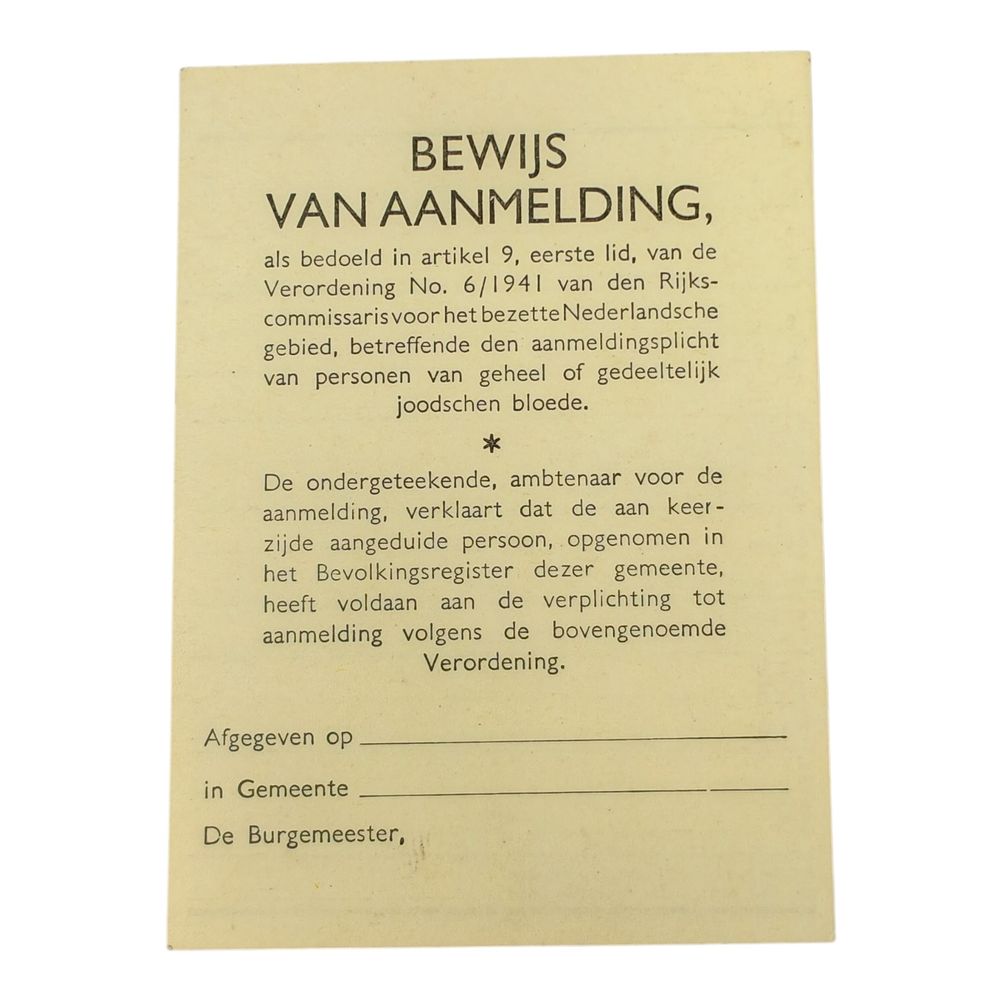
Third Reich Nazi Dutch Jewish Registration Card - Dutch WWII ”Bewijs van Aanmelding” Jewish Registration Document (1941) A printed ”Bewijs van Aanmelding” (Proof of Registration) form issued under Verordening No. 6/1941 of the Reichskommissar fuer das besetzte niederlaendische Gebiet, concerning the compulsory registration of persons of full or partial Jewish descent. The front carries the printed regulatory text and a certification statement by the registering official, with blank lines for the date of issue, the municipality, and the signature of the burgemeester (mayor). The reverse is a ruled data sheet with printed fields for surname, first name, birth details, last residence, nationality, religious affiliation, profession, marital status, and the number of Jewish grandparents as defined under Article 2 of the regulation. The form on offer is unfilled, with all fields left blank. This document belongs to the registration apparatus set up by the German civil administration in the occupied Netherlands following Verordening 6/1941, which compelled all persons of Jewish descent to register with their local municipality. The resulting records formed the administrative basis for the subsequent persecution and deportation of Dutch Jews, making surviving examples of these forms significant primary source material for the study of the occupation period. Issued under the authority of Reichskommissar Arthur Seyss-Inquart, the January 1941 registration ordinance required all Jewish and part-Jewish residents of the occupied Netherlands to register with municipal authorities within weeks, under threat of severe penalty for non-compliance. Approximately 160,000 individuals were recorded through this process, generating a centralized database that Dutch civil servants and German occupation officials subsequently used to organize the isolation, ghettoization, and deportation of the Jewish population, the majority of whom did not survive the war. The high compliance rate reflected both the efficiency of Dutch civil administration and the initial lack of awareness among registrants of the ordinance's ultimate purpose. This blank registration form is an example of the bureaucratic instrument created under Verordnung 6/1941, issued by Reichskommissar Arthur Seyss-Inquart shortly after the German occupation of the Netherlands began, which compelled all persons of full or partial Jewish descent to register with their local municipality. Around 160,000 people were recorded through this process, and the resulting data was subsequently used by German and Dutch authorities to organize the isolation, ghettoization, and deportation of the Jewish population, most of whom did not survive the war. Such forms are studied as key primary evidence of how civil administration was mobilized in the machinery of persecution during the occupation.