Аукцион Bidspirit | WWII German Prisoner of War
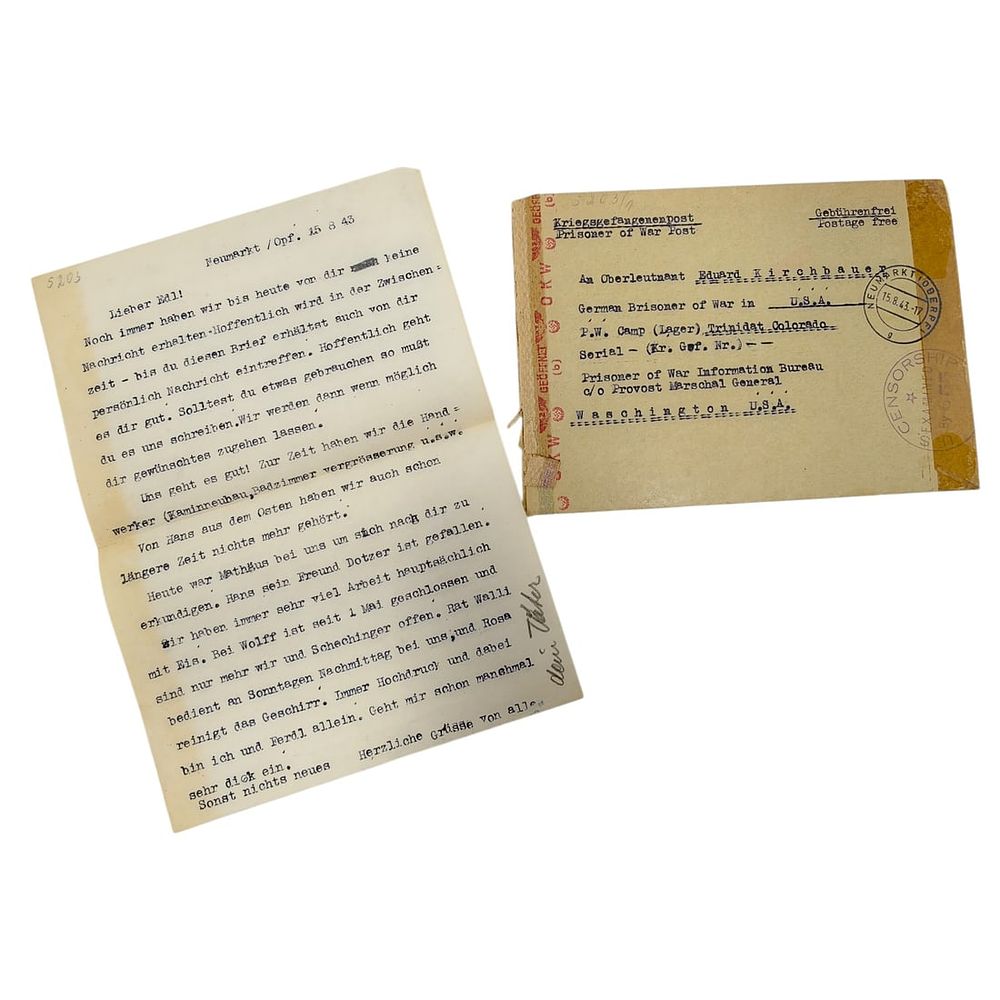
WWII German Prisoner of War Mail - Letter to Oberleutnant Eduard Kirchbauer, POW Camp Trinidad, Colo - A typed German-language letter on a single sheet, dated Neumarkt/Opf. 15.5.43, together with its original envelope addressed to Oberleutnant Eduard Kirchbauer, listed as a German prisoner of war at P.W. Camp Trinidad, Colorado, care of the Prisoner of War Information Bureau, Provost Marshal General, Washington, D.C. The envelope carries printed ”Kriegsgefangenenpost / Prisoner of War Post” and ”Gebührenfrei / Postage free” headings, a censorship band reading ”EXAMINED BY EXAMINER”, and multiple German postal and censor stamps. The reverse of the envelope bears a printed sender's stamp for ”Ed. Kirchbauer, Konditorei - Cafe, Neumarkt, Obpf.” The letter itself is signed ”dein Vater” and discusses family and local news from the home front. This correspondence illustrates the wartime postal channel established for communication between German civilians and captured German military personnel held in the United States, routed through the International Red Cross and the U.S. Provost Marshal General's Prisoner of War Information Bureau. Camp Trinidad in Colorado was one of numerous POW facilities operated in the United States during the Second World War, housing German officers and enlisted men under the terms of the Geneva Convention. This letter documents the ”Kriegsgefangenenpost” system that allowed censored correspondence between families in Germany and German prisoners of war held abroad, with postage waived and mail routed through the International Red Cross and the U.S. Provost Marshal General's Prisoner of War Information Bureau. Camp Trinidad, Colorado, was one of several hundred POW installations established across the United States after large numbers of Axis servicemen, particularly from the North African campaign, were transported there for internment from 1943 onward. Officers such as Oberleutnant Kirchbauer were held under Geneva Convention provisions permitting regular family correspondence, work, and welfare oversight by the Red Cross, and such letters were subject to censorship on both sides of the Atlantic, as indicated by the examiner's band on the envelope.