Bidspirit auction | “Beitar”, Jewish German DP camp
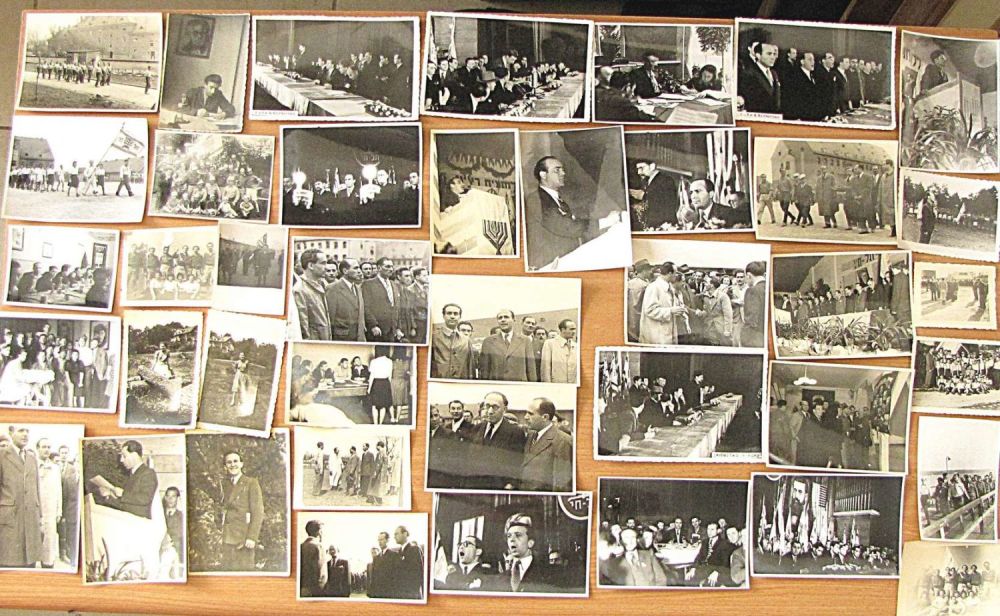
“Beitar”, Jewish German DP camp “Landsberg”, She'erit Ha-Pleita. Large archive of 150 Photo of “Beitar” activist including photos made before WWII and orig. photo of Ze'ev Jabotinsky - “Beitar”, Jewish German DP camp “Landsberg”, She'erit Ha-Pleita. Large archive of 150 Photo of “Beitar” activist including photos made before WWII and orig. photo of Ze'ev Jabotinsky Most of them 1946-1948, PC size or less. 1. Parade of Beitar organization in DP camp 2. Meeting of leadership of Beitar organization 3. Wedding in DP camp 4. Photos depicting every day in camp 5. Prewar photo of Ze'ev Jabotinsky, PC size 6 Prewar photos of activists of Beitar Some photos signed by photographer or stamped by Photo studios: One photo has a cachet: Foto Kerber Eschwege, Unnra Area 1035, block 22/10 Some photos have a name of the photographer B. Berneman in German and Hebrew Several photo made by Munchen Photo studio of Grimm 4 photos have a cachet in Hebrew: Ohev Zion. Landsberg. The Landsberg DP camp was erected in the American-occupied zone of Germany, about 60 km west of Munich, on land that had housed a German military compound during the war. The camp was originally designated for all displaced persons, but from October 1945, it was intended for Jews only. Some 5000 Holocaust survivors were gathered at the camp, most of them from Russia, Lithuania and Latvia. Landsberg was the second largest DP camp in the American zone. Samuel Gringauz, Chairman of the Central Council of Liberated Jews in the American zone, was the founding editor of the camp’s newspaper, first printed in October 1945. This newspaper gained a reputation as one of the best in the American zone. Landsberg DP camp was also the site of an ORT (Organization for Reconstruction and Training) field headquarters. The organization operated a comprehensive educational network in the camp, ranging from preschool through college, including training farms (Hachshara), kibbutzim, a Talmud Torah and a Klausenburger Yeshiva. From October 1945, Jakob Oleiski ran courses for professional training in Landsberg, through ORT. The camp boasted a rich cultural life, including a theater troupe, and a theater and cinema. Holocaust survivor and artist Samuel Bak lived and worked there. In October 1945, David Ben Gurion, Chairman of the Jewish Agency, visited Landsberg and was instrumental in acquiring more space for the overpopulated camp. The number of camp inhabitants started to decrease in 1947, and by July 1949 only 2,150 Jews were left there. The Landsberg DP camp was closed on 15 October 1950.