Bidspirit auction | Yamamoto Chikuryosai I (1868-1945)
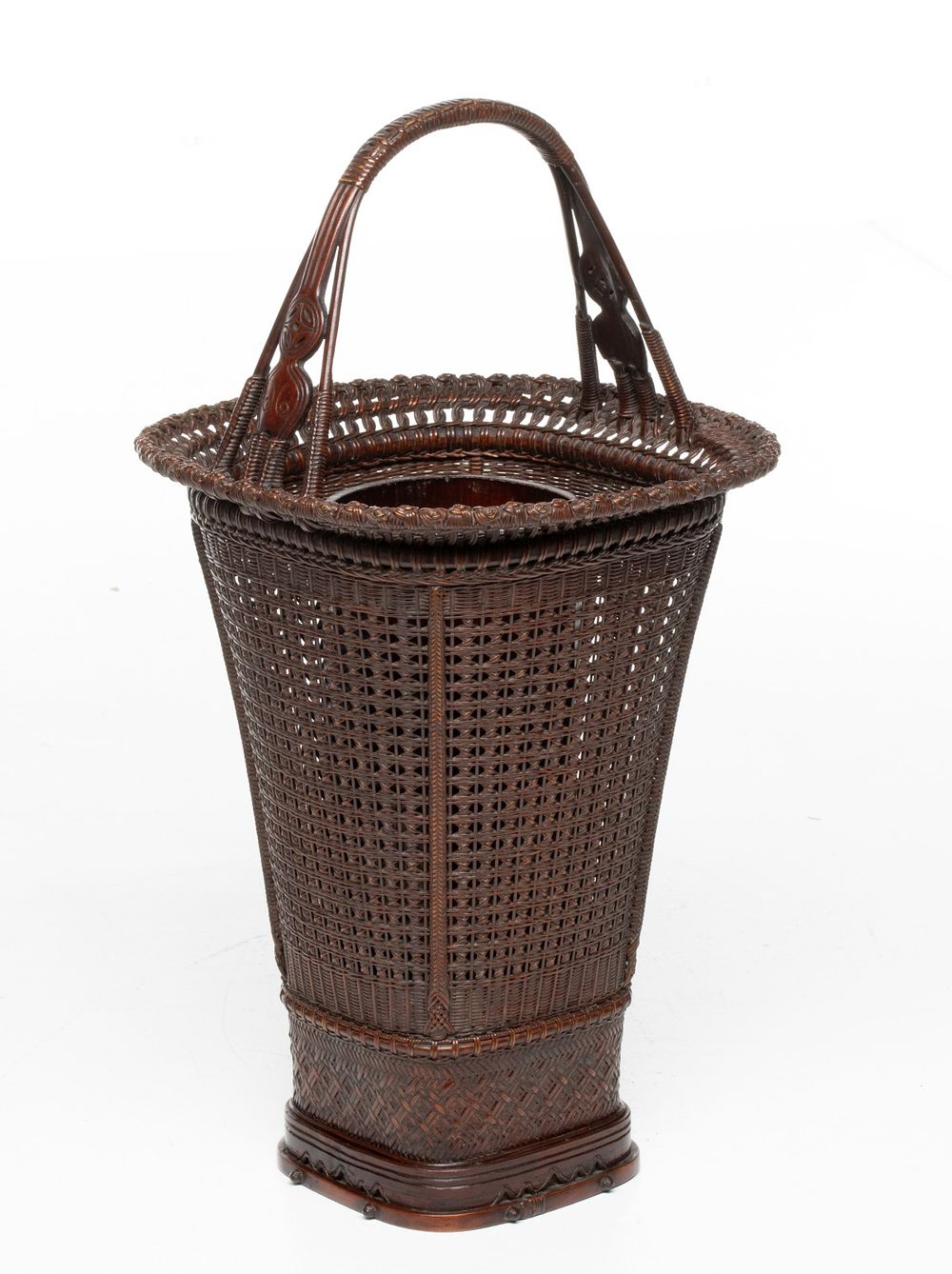
Yamamoto Chikuryosai I (1868-1945) - A CARVED AND WOVEN BAMBOO BASKET ATTR TO CHUKURYUSAI. Yamamoto Chikuryosai I (1868-1945) One of two examples of this precise form offered in this catalog, The other was made by Tanabe Chikuunsai I (1877-1937). The very fine and complex example ATTRIBUTED TO Yamamoto Chikuryosai I (1868-1945) emulates Ming-dynasty Chinese bronzes and archaic vessels with its trumpet-like flared rim and squarish form on carved plinth base composed from multiple layers of bent bamboo. The body flares continuously from the diagonally woven base portion just above the carved foot; rising in a dense horizontal corded twill of hexagonal and horizontal lattice grid divided into vertical quadrants by four raised corded bamboo ribs running the full length to the double gallery top rim cantilevered and smartly bound by interlocking spiral loops knotted in high relief. The unusual handle is carved from solid bamboo plates into pierced and engraved archaic coin style crests above arabesque-scrolled medallions. The handle grip is attractively adorned in relief-wrapped squares of tight bamboo wrap. The work is accompanied by a fitted bamboo cylinder liner ( otoshimono ) and the original inscribed paulownia-wood storage box ( tomobako ). Measures 16 x 8.75 inches in diameter. Without proof of exemption, be aware that internet sales tax applies to all Internet transactions and local sales tax may apply to local pick-up transactions. We happily provide seamless in-house packing and shipping services on nearly everything we sell. Until further notice, we cannot offer international shipping in-house. Dimensions Measures 16 x 8.75 inches in diameter. Condition Very good condition. There are no breaks, cracks, repairs, losses or areas of discoloration, noting some high points with very minor light surface wear. Provenance Provenance: The estate of John Adair Jr. (1942-2025), founder and proprietor of Kurofune Antiques in Tokyo (est. 1978), a world-renowned destination for Japanese basketry, prints and furniture featured in The New York Times, The New Yorker, and The Wall Street Journal.