Bidspirit auction | Article on faith and the
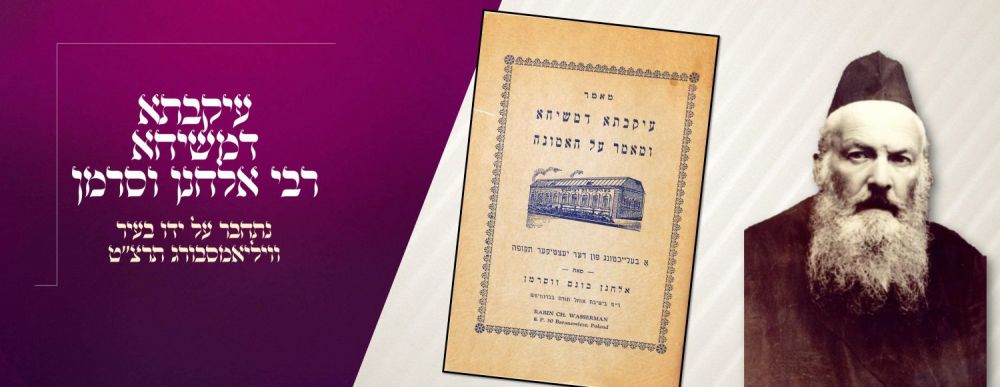
Article on faith and the redemption in Yiddish by R' Elhanan Bunim Wasserman. 1939. - Article on faith and the redemption in Yiddish by R' Elhanan Bunim Wasserman. 1939. ”מהדורה ראשונה” - קונטרס באידיש, מאמר ”עיקבתא דמשיחא” ומאמר על האמונה ”א בעלייכטונג פון דער יעצטיקער תקופה”. מאת הגאון הקדוש רבי אלחנן בונם ווסרמן זצוק”ל הי”ד. הגאון רבי אלחנן כתב את קונטרס הנוכחי בעיר וויליאמסבורג ברוקלין, בעת היותו שוהה בארצות הברית בשנת תרצ”ט בכדי לקבץ מעות למען החזקת ישיבתו ”אהל תורה” בברנוויטש, ולפי עדות כמה אנשים שזכרו עוד איך שרבי אלחנן היה יושב בשעות הלילה המאוחרות וראשו מרוכן על גבי שלחן הכתיבה עם עטו בידו, עורך וכותב את מאמרו הנפלא דנן, בדעת תורה והשקפת התורה הברורה על מצב הזמן והתקופה בימים שלפני השואה האיומה, והאיר עיני ישראל בזה עד היום! ניו יארק תרצ”ט. כריכה רכה, מצב טוב מאוד. על הכריכה ועל עמוד האחרון תמונה מבנין ישיבת אוהל תורה בבאראנוביץ. R. Elhanan Bunim Wasserman (1875–1941), Lithuanian talmudic scholar, yeshiva head, and communal leader. R. Elhanan received his education at the yeshivot of Volozhin and Telz, which were headed at the time by R. Eliezer Gordon and R. Simeon Shkop, respectively. In 1899 he married the daughter of Meir Atlas, rabbi of Salant, and spent some years studying in his father-in-law's home. In 1903 he was appointed head of the yeshiva of Amtshilov, where he proved an outstanding teacher, greatly influencing his students. He joined the kolel of the Hafez Hayyim in Radun in 1907 and remained there until 1910, when he was appointed rabbi of Brest-Litovsk. During World War I he returned to Radun and when the war reached that town the yeshiva moved to Smilovichi, where R. Elhanan was appointed its head. After the war he moved to Poland and established a yeshiva at Baranowicze, which became one of the most famous in Eastern Europe. He was one of the main pillars of the Agudat Israel movement together with R. Hayyim Ozer Grodzinski and the Hafez Hayyim, and was regarded as the latter's spiritual successor. R. Elhanan emerged as one of the outstanding leaders of Orthodox Jewry. In addition to his academic activities, he played a major role in communal affairs, contributing extensively to the Jewish press, and figuring prominently at Agudat Israel conferences.