Bidspirit auction | Tallit Kattan Worn by the
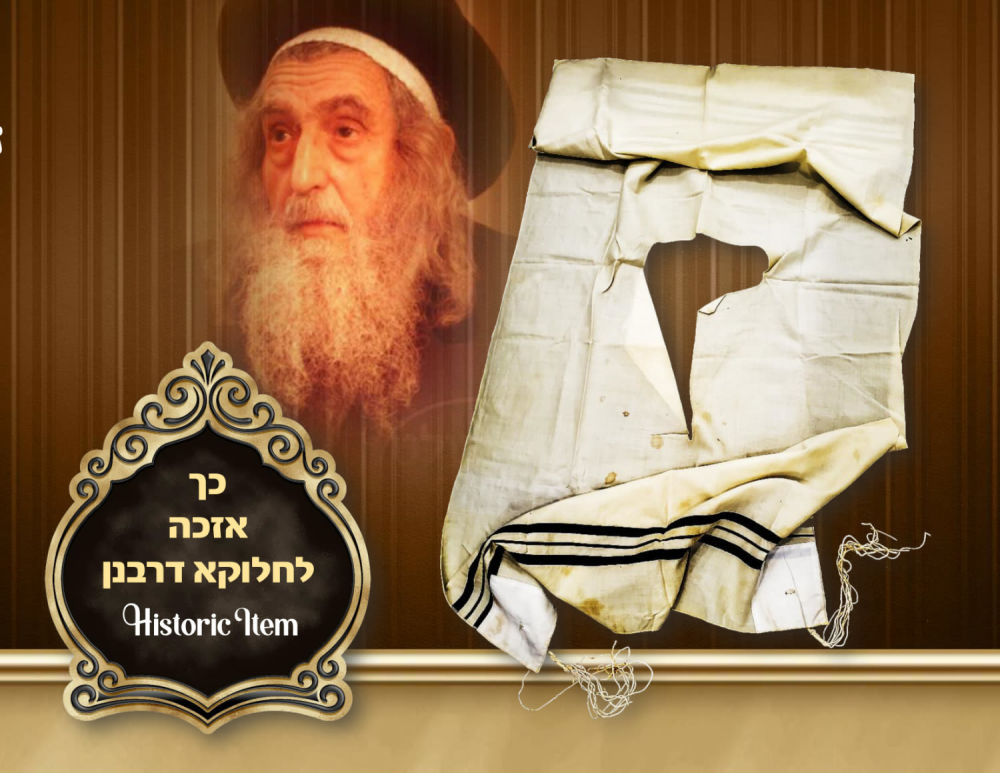
Tallit Kattan Worn by the Admo”r of Ribnitz over a Lengthy Period - Tallit Kattan Worn by the Admo”r of Ribnitz over a Lengthy Period ”And the Tallit will spread its wings over them and shade them, as an eagle awakens its nest and hovers over its fledglings.” Tallit-kattan worn over the course of many years and blessed by the Admo”r Rabbi Chaim Zanvl Abramowitz of Ribnitz. First-rate ritual article used by a special, unique tzaddik among the tzaddikim of recent generations. The segulah of tzitzit is well-known, aside from its being a Torah commandment which is mentioned three times a day - in kriyat shema (the Vilna gaon expressed in tears, just before passing away, that the value of tzitzit in the world-to-come is immeasurable). Tzitzit - and particularly the tallit-kattan which belonged to a tzaddik of recent generations - constitutes a protection against damagers, and is also a segulah for a wife, as it says in the Ar”i's writings (Pri Etz Chaim, Sha'ar HaTzitzit, Chapter 2): ”The issue of the four tzitzit is that they all derive from the foundation called ”tzaddik elyon.” As the verse says, from the edge of the Earth we have heard songs glory for the righteous ... And it is known that a woman does not make a covenant except for with one who has been made a vessel ...” R. Chaim Zanvil Abramowitz, The Ribnitzer Rebbe (1898-1996), was born in Botoșani, Romania, and was orphaned from his father at the age of two and a half. An exceptional Torah scholar, tzaddik and wonder-worker, he served as rebbe under the Communist rule in Romania, at much danger to his life. As a young orphan, he was raised in the house of R. Yehuda Aryeh Leib Frankel of Botoșani and was rabbinically ordained by R. Yehuda Leib Tzirelson. He had especially close ties to Rebbe Avraham Matityahu Freidman of Ştefăneşti. Reputedly, the Rebbe of Ştefăneşti, who had no children, used to call him ”my dear son”, and he in turn would say about the Rebbe of Ştefăneşti: ”I am his only son”. The Rebbe of Ştefăneşti told R. Abramowitz on his death bed: ”I am bequeathing you three things, my Divine Spirit, my form and my grace”. R. Abramowitz was an outstanding Torah genius and extremely well-versed in Torah knowledge; at the age of 18, he already knew the entire Talmud. Known from his youth for his virtuous ascetic conduct, he practiced acts of self-denial, such as immersing in icy water, fasting for days wrapped in his tallit and tefillin, and reciting Tikun Chatzot while wearing sackcloth, shedding bitter tears for many hours. In the wake of World War II, many rabbis left Russian-occupied areas due to the difficulties in maintaining religious Jewish life under Communist rule, but he remained in the city of Râbniţa (today Moldova), devotedly serving as a Chassidic rebbe. In spite of governmental prohibitions, he continued observing all the mitzvot openly, performing the duties of a shochet, mohel and Torah teacher. In his merit, Chassidic life was fully preserved behind the Iron Curtain. Communist officials knew of his activities yet respected him. Reputedly, he was once arrested for his actions, but was released upon promising that the judge's wife would be cured if he was freed. After the Iron Curtain fell, he immigrated to Jerusalem and thereafter to the United States, where masses flocked to his door. He was known to possess the Divine Spirit and said of himself that he could see ”from one end of the world to the other”. His fame spread as a tzaddik and wonder-worker. Thousands came to ask his advice and receive his blessings, and saw incredible divine salvation. His blessings helped cure illnesses, and helped many find their match and give birth to children. He was an exceptional Ohev Yisrael and would bitterly shed tears when he heard of the pain of another Jew. He used to say that the salvations he achieved were in the merit of feeling the pain of his brethren and his tears and prayers on behalf of the distressed.