Bidspirit auction | Lionel Corporation Prewar O Gauge
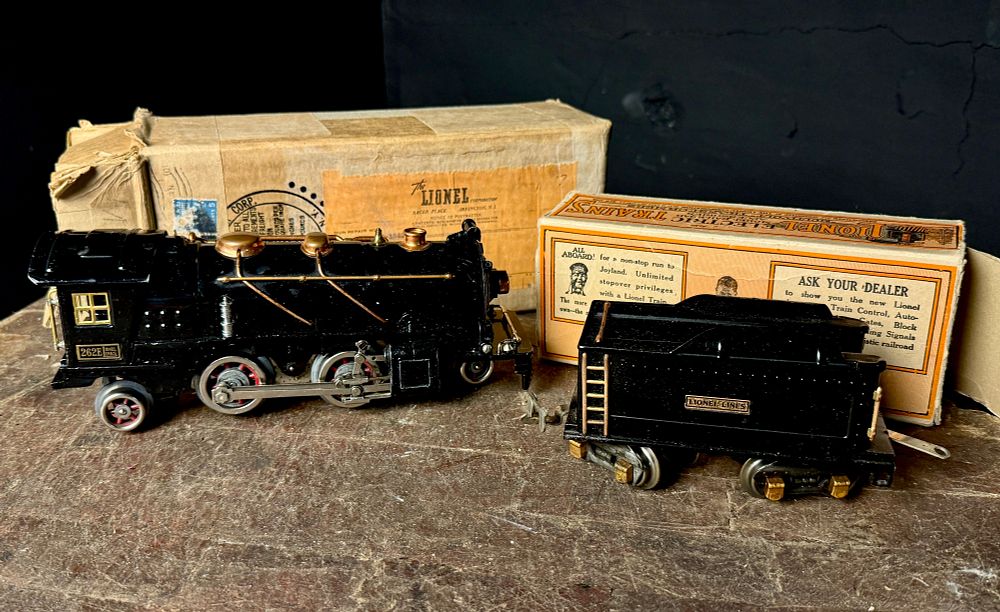
Lionel Corporation Prewar O Gauge 262E Steam Locomotive and 262T Tender with Original Boxes - A vintage O gauge model electric train set manufactured by The Lionel Corporation of New York, N.Y. The set consists of a 2-4-2 steam locomotive, model 262E, and a matching coal tender, model 262T. Both pieces are constructed of black-finished die-cast metal featuring brass and copper-toned piping, domes, and handrails with nickel-plated drive rods and accents. The locomotive cab features a brass plate on the side reading 262E LIONEL LINES. The underside of the engine bears an embossed metal plate on the motor frame reading LIONEL O GAUGE MOTOR LUBRICATE BEFORE USING AND WHEN REQUIRED THE LIONEL CORPORATION N.Y. MADE IN U. S. OF AMERICA. The tender is fitted with a brass plate on the side reading LIONEL LINES and a circular red, white, and blue LIONEL logo decal on the rear. The set includes a portion of an orange cardboard box end flap for the 262T Black Tender, and the entire assembly is contained within a corrugated cardboard shipping box from The Lionel Corporation. This outer box retains a paper shipping label addressed to J. A. Kelly in Reedsville, Pa., showing a date of 12-6-39, and includes three U.S. postage stamps (two 5-cent and one 2-cent denomination) along with a circular Lionel Corp. shipping stamp. The locomotive is equipped with a pilot truck, trailing truck, and detailed valve gear. These items are antique. The black finish on the locomotive and tender displays a high gloss with scattered small paint chips and edge wear consistent with age, notably on the cab roof (photo 2) and the edges of the tender (photo 5). The brass and copper trim pieces are intact, showing a natural aged patina. The wheels and undercarriage show light surface oxidation and wear from use (photo 15). The original orange tender box is in poor condition with heavy surface tearing, creases, and missing flaps (photo 6). The outer 1939 shipping box shows significant structural wear, including compression, corner crushing, and age-toning to the paper labels (photo 16). The internal mechanism and wiring are present but have not been tested for functional operation.