Bidspirit auction | Antique American Miniature Mahogany Veneer
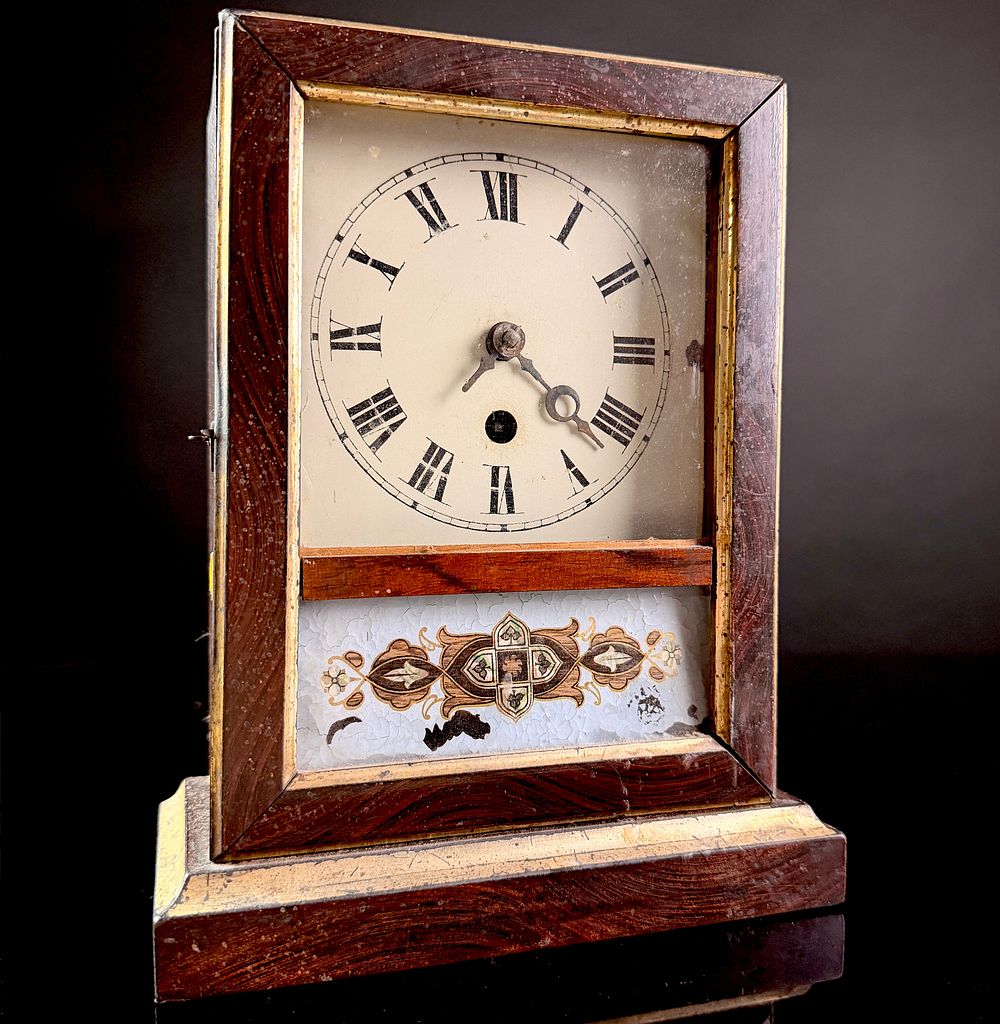
Antique American Miniature Mahogany Veneer OG Mantel Clock with E Pluribus Unum Label - A 19th-century American miniature shelf or OG mantel clock featuring a rectangular case with mahogany veneers and a dark, figured grain. The case is constructed with a hinged front door containing two panes of glass separated by a wooden horizontal muntin. The upper pane protects a square, white-painted metal dial featuring a circular chapter ring with black Roman numeral hour markers and a minute track. A single winding hole is situated below the center arbor. The clock is fitted with two black-painted metal hands: an hour hand with a spade tip and a minute hand featuring a circular counterweight. The lower glass pane is decorated with a transfer-printed or hand-painted geometric and floral motif on a white background. The interior of the case features a partial paper label applied to the backboard, depicting an American eagle and a ribbon printed with the words E PLURIBUS UNUM. The movement is mechanical and pendulum-driven, accompanied by a brass-toned pendulum bob and a winding key. The back of the wooden case features a metal hanging loop attached with a screw. Height: 9.5 inches Width: 6.75 inches Depth: 3 inches. The mahogany veneer shows significant surface wear, including scratches, scuffs, and small losses to the finish throughout the case (photo 1, 2, 3, and 4). The gilt-painted inner border on the door is heavily worn and flaking (photo 1). The decorative painting on the lower glass pane shows significant cracking, peeling, and loss of the white background, particularly at the bottom edge (photo 1 and 7). A strip of yellow masking tape is adhered across the interior of the glass panes (photo 5 and 7). The white-painted dial has minor paint loss around the edges and at the mounting screws, along with general surface dirt (photo 6). The internal paper label is heavily aged, stained, and torn, with significant sections missing (photo 5). The brass pendulum bob and the winding key exhibit surface oxidation and tarnishing (photo 8). The mechanical functionality of the movement is not tested.