Bidspirit auction | Pottier and Stymus Renaissance Revival
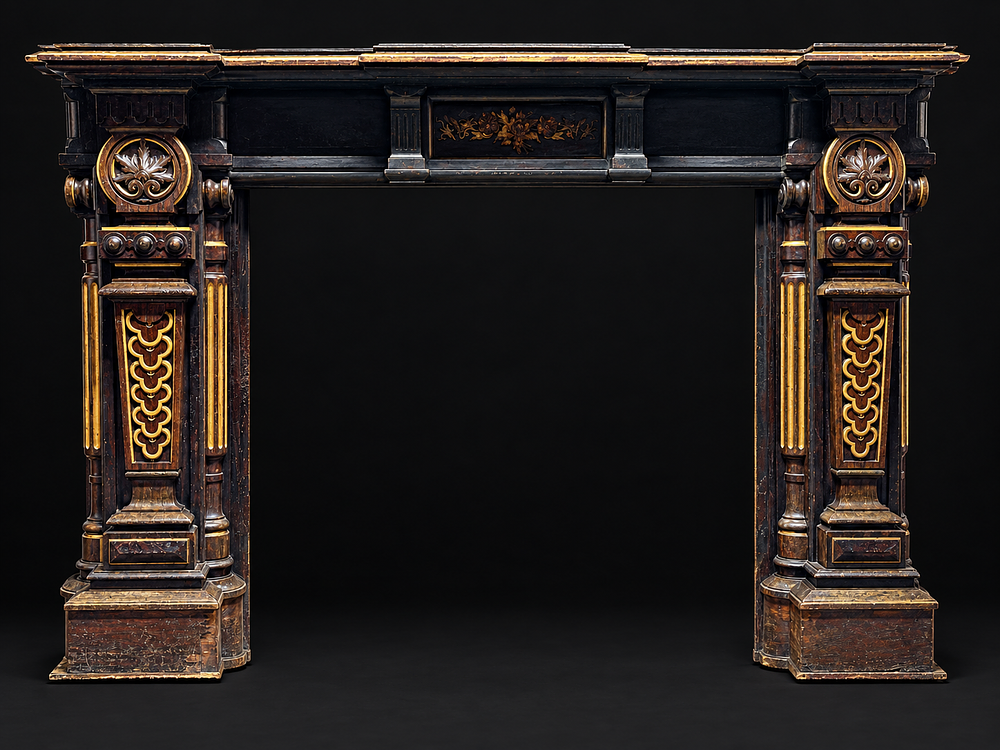
Pottier and Stymus Renaissance Revival Mark Twain Ebonized and Marquetry Fireplace Mantel from the Langdon Mansion - This monumental ebonized wood fireplace mantel surround was custom-commissioned from the prestigious New York furniture firm of Pottier and Stymus for the Langdon Mansion in Elmira, New York. The mansion served as the family home of Olivia Langdon, who famously married the author Samuel Clemens, known as Mark Twain, in the parlors of the estate in 1870. The mantel is constructed of ebonized mahogany or walnut and features a central frieze set with a rectangular panel of finely executed wood marquetry. The marquetry depicts a lush horizontal spray of roses, buds, and foliage in varying shades of boxwood and satinwood against a dark ground. The central opening is flanked by architectural pilasters adorned with circular medallions containing high-relief carved acanthus leaves with gilt highlights. Below these are horizontal rows of three turned bosses and recessed vertical panels featuring gilded interlocking stylized C or chain-link carvings. The sides are finished with recessed panels and turned, fluted quarter-columns. On the reverse of the wood, there is a literal handwritten inscription in dark script reading 35756. Langdon (photo 19, 21), with the numerals repeated in a second location (photo 20) and the name Langdon appearing again in a third (photo 21). This labeling was applied at the factory to identify the piece for the custom residential build. Archival photography provided with the lot shows the mantel in situ within the grand nineteenth-century interior of the Italianate Langdon Mansion (photo 2, 3). Overall shelf width: approximately 79 inches (photo 26) Central section width: approximately 47.5 inches (photo 28) Height to mid-point ledge: approximately 31 inches (photo 27). The top surface of the mantel shelf shows extensive age-related drying, appearing as a network of fine crazing and alligatoring of the finish (photo 23). There are scattered surface scratches, scuffs, and small indentations consistent with original residential use (photo 23). Small chips and nicks are visible along the base edges and corners of the tiered plinth blocks (photo 11, 13). The original gilding on the carved floral and chain motifs shows moderate thinning and loss, particularly in recessed areas (photo 14, 25). The structural components are currently stabilized with modern wooden cross-bracing for safe transport and storage (photo 10, 22).