Bidspirit auction | PRAYERS FOR AN EPIDEMIC -
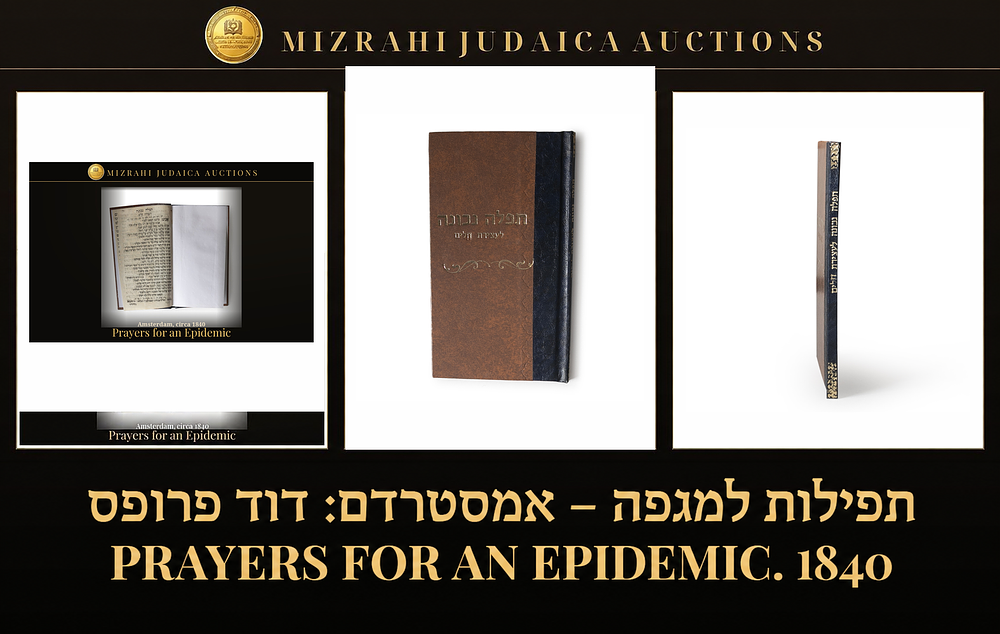
PRAYERS FOR AN EPIDEMIC - Amsterdam: David Proops, circa 1840. תפלה נכונה לעצירת חלים - Rare ephemeral Hebrew liturgical booklet. Two pages, elegantly bound in contemporary leather. A special prayer issued for communal recitation during a time of epidemic. The text directs that Avinu Malkeinu be recited following the Raḥum ve-Ḥanun supplication at Minḥah, after which follows an extended prayer beginning רבון העולמים, imploring Divine mercy to halt the deadly outbreak then afflicting the community. Expressing profound anxiety over the spread of disease, the prayer beseeches God to remove the plague, spare the afflicted, and transform divine judgment into compassion. Printed by the celebrated Amsterdam Hebrew press of David Proops and distributed through the Jewish booksellers Belinfante & De Vitta of Eerste Weesperstraat No. 9, the pamphlet belongs to the long tradition of occasional Hebrew liturgical publications produced in response to extraordinary communal circumstances. Unlike the regular prayer book, such emergency prayers were intended for immediate use during periods of crisis and were seldom preserved, rendering surviving copies uncommon. The title is particularly noteworthy. Rather than standing alone, תפלה נכונה appears to have functioned as the title under which the Proops press issued a series of liturgical publications, including its well-known siddur Siddur Tefilah Nechonah. The present pamphlet therefore represents a specialized supplement to that broader liturgical program, prepared specifically לעצירת חלים - for the cessation of an epidemic. This modest booklet preserves a poignant reminder of the manner in which Jewish communities confronted public health crises through communal prayer and supplication long before the advent of modern medicine. Elegantly bound in contemporary leather, fine, complete copy. References : National Library of Israel, תפלה נכונה לעצירת חלים (Amsterdam: David Proops; catalogued ca. ת”ר); National Library of Israel, (סדור תפלה נכונה (1852.