Bidspirit auction | (WOMEN). Two Halachic contracts: Shetar
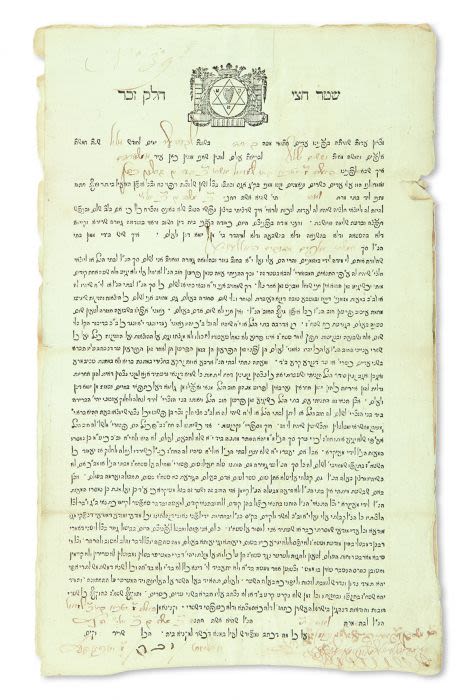
(WOMEN). Two Halachic contracts: Shetar Chatzi Zachar. * Tena’im. Printed, with manuscript additions. Hebrew text. Two leaves. Amsterdam: 30 Elul 1806 This type of document is given to a woman by her father at the time of her marriage. It ensures that when he dies she will inherit half a share in his estate, even though according to Torah law daughters do not inherit anything. The share is half of what her brothers inherit. The origin of the Shetar Chatzi Zachar stems from a time when enormous sums were paid in order to marry off daughters, and such dowries shrunk parental estates, creating family discord between young women and some very unhappy brothers. This document allowed dowries to shrink to a manageable level by ensuring that at a future date additional money would come into the marriage, after the father dies. The source for such a legal instrument can be found in Rabbi Moses Isserles’ gloss to Shulchan Aruch CM 281:7. The second document is a prenuptial agreement signed at a betrothal ceremony. The bride is one Leah, the groom Moshe ben Eliyahu, and the names of the bride’s parents are Yitka bat Shmuel and Ber ben Gershon HaKohen. The dowry is listed as 5000 gulden (zahuvim holland). This type of document is given to a woman by her father at the time of her marriage. It ensures that when he dies she will inherit half a share in his estate, even though according to Torah law daughters do not inherit anything. The share is half of what her brothers inherit. The origin of the Shetar Chatzi Zachar stems from a time when enormous sums were paid in order to marry off daughters, and such dowries shrunk parental estates, creating family discord between young women and some very unhappy brothers. This document allowed dowries to shrink to a manageable level by ensuring that at a future date additional money would come into the marriage, after the father dies. The source for such a legal instrument can be found in Rabbi Moses Isserles’ gloss to Shulchan Aruch CM 281:7. The second document is a prenuptial agreement signed at a betrothal ceremony. The bride is one Leah, the groom Moshe ben Eliyahu, and the names of the bride’s parents are Yitka bat Shmuel and Ber ben Gershon HaKohen. The dowry is listed as 5000 gulden (zahuvim holland).