Bidspirit auction | \
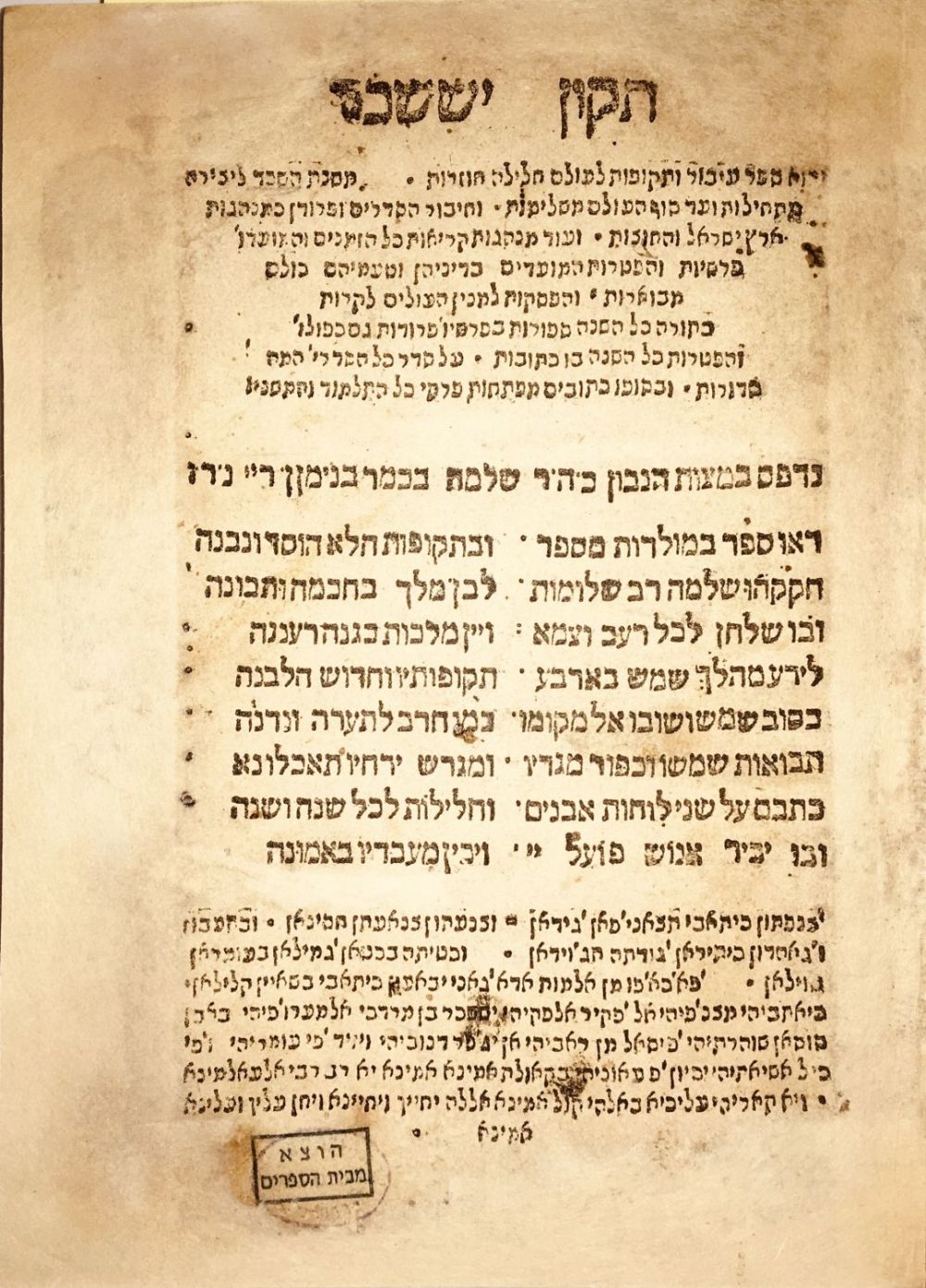
\ - IBN SUSAN, ISSACHAR. Tikun Issachar [on the Calendar and customs through the year]. FIRST EDITION. Numerous calendrical tables and spheres. Marginalia. ff. 96. Ex-library, Modern boards. 4to. Vinograd, Constantinople 224. Constantinople, Solomon Jabez, 1564. A record of the customs of the Musta’arab Jewish community of Eretz Israel, i.e. Jews who had never ceased residing in the Holy Land. Their practices become increasingly rare as they slowly took on Spanish Sephardic custom following the arrival of Sephardim from Ottoman Lands earlier expelled from the Iberian Peninsula. R. Issachar ibn Susan (c. 1510- after 1580), scion of a prominent Moroccan family, immigrated c. 1527 from Fez to Jerusalem, where he studied with R. Levi ibn Habib (c. 1483-1545). Later, he relocated to Safed and became affiliated with both the Maghrebi (North African) and Mustarabian/Morisco (native Middle Eastern) communities. Interested in the Jewish calendar and the various synagogue customs of communities in the Holy Land and the Diaspora, he completed a first draft of the present book about 5299 (1538-1539) with calendaric information extending until the year 6000 (2239-40) “the end of the world.” In it, he made extensive use of Sepher Abudraham but also included valuable information about local rites, some of which is known from no other source. The treatise was copied in two or three locales prior to being printed, and was published without the author’s knowledge by Solomon ben Benjamin ibn Rey under the present title, adding some of his (Ibn Rey’s) own calendaric material. The work was well received, especially among communities in Yemen and India, and even influenced R. Yoseph Karo while he was compiling his Shulchan Aruch. The volume closes with the text of the first chapter of Tractate Derech Eretz Zuta, which the Mustarabian community in Safed had the custom of studying on each of the seven Sabbaths between Pesach and Shavu’oth. The Highly Scarce First Edition.