Bidspirit auction | (SPAIN). MANUSCRIPT EDICT BY WHICH
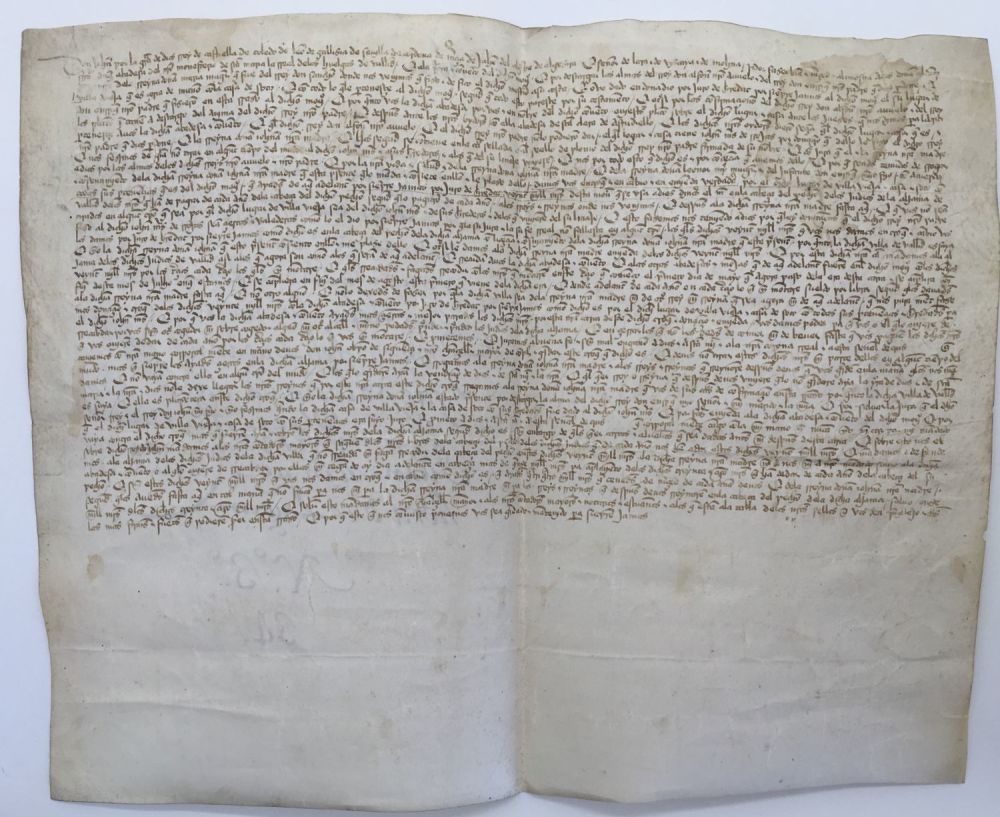
(SPAIN). MANUSCRIPT EDICT BY WHICH KING OF CASTILE, JUAN I GRANTS THE NEWLY FOUNDED MONASTERY OF SAN BENITO OF VALLADOLID AN INCOME FROM THE ALJAMA OF THE JEWS OF VALLADOLID (NORTH CENTRAL SPAIN). (Castile), c.1379. Contemporaneous copy of the original grant from the King of Castile of 20,000 maravedís from the annual cabeza del pecho (head-tax/capitation tax) of the Jewish aljama (community) of Valladolid. Although the document is not dated, it is clear is stems from King Juan, as it notes Alfonso ”our grandfather” (King Alfonso XI) and Enrique ”our father” (Enrique II, the first Trastámara king of Castile, who won the throne from his half-brother, Pedro I, after a bloody civil war), and even the infante Enrique, Juan's son (future Enrique III). The grant is to the female Cistercian monastery of Santa María la Real de Huelgas of Valladolid (see https://huelgasreales.es/es/instalaciones/el-monasterio/ ). Juan's father, Enrique II, and his mother, queen consort Juana Manuel ( https://dbe.rah.es/biografias/13535/juana-manuel ) gave the village called Villa Vieja (Villavieja del Cerro?), which was actually a property of the Las Huelgas monastery, to a nobleman by the name of Juan Martínez de Rojas, lord of Monzón y Cavia. The nuns went to court to get their property back, and it was soon determined that the village was indeed theirs. But instead of handing it back to Las Huelgas, King Juan decided to compensate the nuns by granting them the money from the capitation tax of the Jewish community of Valladolid. The document emphasizes several times that the exchange was done with the explicit consent of the Queen Mother, Juana, who was present during the granting of the charter. Her agreement was required, the document says, because Valladolid was ”her city” and thus the money from the aljama was also hers. Noted toward the end of the document is recorded the total amount of the tax is 35,000 maravedís, from which the nuns would receive 20,000. Furthermore, should the Jews fail to fulfill their financial obligation to the nuns, they will be imprisoned and held without food and drink until they pay. (This was the sort of threatening language that Juan's father, Enrique, introduced in his grants of Jewish taxes to religious institutions. Enrique used antisemitic propaganda during the civil war to gain support from municipal councils in northern Castile). It was in fact common practice for Castilian kings to grant a part of, or the entire amount of taxes from Jewish communities to religious institutions. The document must be dated between 1379 - Juan's coronation, and 1381 - the year of Juana Manuel's death, as she was still alive when this charter was granted). The monastery of San Benito de Valladolid, founded in 1390, took the leading role in the monastic reform of fifteenth-century Castile. See Maya Soifer Irish, Jews and Christians in Medieval Castile: Tradition, Coexistence, and Change (2016). See https://www.jewishvirtuallibrary.org/valladolid .