Bidspirit auction | Bronze mirror, Trade Route from
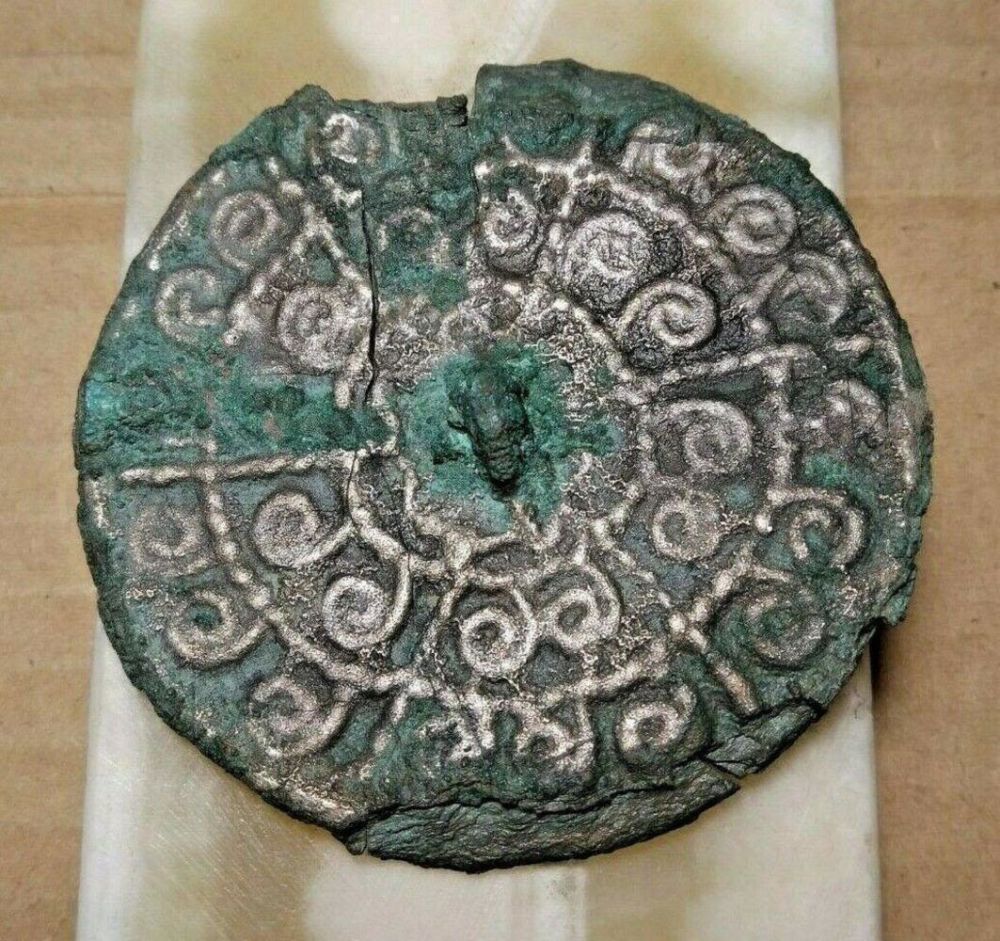
Bronze mirror, Trade Route from Varangians to Greeks, 800-1200 AD - This bronze mirror has three layers of spiral design and has a high content of tin. The research is going on to find out, which culture has produced this mirror. Diameter: 64 mm; Weight: 38.40 g; Provenance: found on the banks of the Dnieper River; Condition: The mirror is full of cracks and broken into several pieces (look at the photos). References: The Trade Route from the Varangians to the Greeks was connected to other waterways of Eastern Europe, such as the Pripyat-Bug waterway leading to Western Europe, and the Volga trade route, which went down the Volga waterway to the Caspian Sea. Another offshoot was along the Dnieper and the Usyazh-Buk River towards Lukoml and Polotsk. The Trade Route from the Varangians to the Greeks was used to transport different kinds of merchandise. Wine, spices, jewelry, glass, expensive fabrics, icons, and books came from the Byzantine Empire. Volhyn traded spinning wheels and other items. Certain kinds of weapons and handicrafts came from Scandinavia. Northern Rus' offered timber, fur, honey, and wax, while the Baltic tribes traded amber. In the second half of the eleventh century, the Crusades opened more lucrative routes from Europe to the Orient through the Crusader states of the Middle East. By that time, Rus' had strengthened its commercial ties with Western Europe, and the route from the Varangians to the Greeks gradually lost its significance. For a related military route, see Muravsky Trail.