Bidspirit auction | 山城國住藤原清綱, Yamashiro no Kuni ju
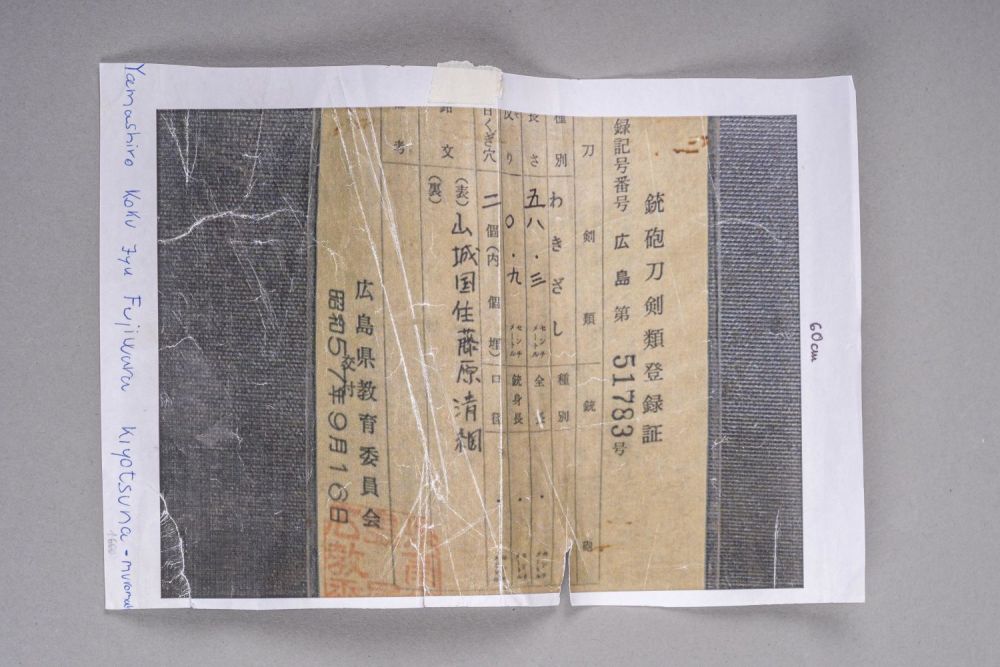
山城國住藤原清綱, Yamashiro no Kuni ju Fujiwara Kiyotsuna (1526-1528), Katana Japanese Samurai sword - 山城國住藤原清綱, Yamashiro no Kuni ju Fujiwara Kiyotsuna (1526-1528), Katana Japanese Samurai sword: ”Yamashiro (province) no kuni ju (live in) Fujiwara Kiyotsuna (name of the swordsmith)” Province: Yamashiro; Era: Taiei; Active period: 1526-1528; Nagasa (blade of katana): 58.3 cm; Total length in shirasaya (wooden scabbard): 84.2 cm; Hawley rate: 20 (FUJ36); Toko Taikan rating: ¥ 3.5 M = $23,526 USD; Shinogi-zukuri (most common katana blade shape) with iori mune (pyramidal shape of the blade back), the hamon is gunome in nioi-deki, the hada is mokume. The habaki is made of silver and copper. The nakago is suriage with two mekugi-ana, the blade tip is kuri jiri, and the yasurime (file mark pattern) is sujikai (diagonal). Condition: perfect polishing with amazing hamon; Provenance: Hungarian private collection, then Austrian collection, then Florida, USA. Registration date of the sword in Japan: September 16, 1982; Historical reference about Yamashiro province: Yamashiro Province (山城国, Yamashiro no Kuni) was a province of Japan, located in Kinai. It overlaps the southern part of modern Kyoto Prefecture on Honshū.[1] Aliases include Jōshū (城州), the rare Sanshū (山州), and Yōshū (雍州). It is classified as an upper province in the Engishiki. Yamashiro Province included Kyoto itself, as in 794 AD Yamashiro became the seat of the imperial court, and, during the Muromachi period, was the seat of the Ashikaga shogunate as well. The capital remained in Yamashiro until its de facto move to Tokyo in the 1870s. ”Yamashiro” was formerly written with the characters meaning ”mountain” (山) and ”era” (代); in the 7th century, there were things built listing the name of the province with the characters for ”mountain” and ”ridge”/”back” (山背国). On 4 December 794 (8 Shimotsuki, 13th year of Enryaku), at the time of the establishment of Heian-kyō, because Emperor Kanmu made his new capital utilize the surroundings as natural fortification, the character for shiro was finally changed to ”castle” (山城国). Later shiro from the province name replaced the older ki as the Japanese reading for the character 城.