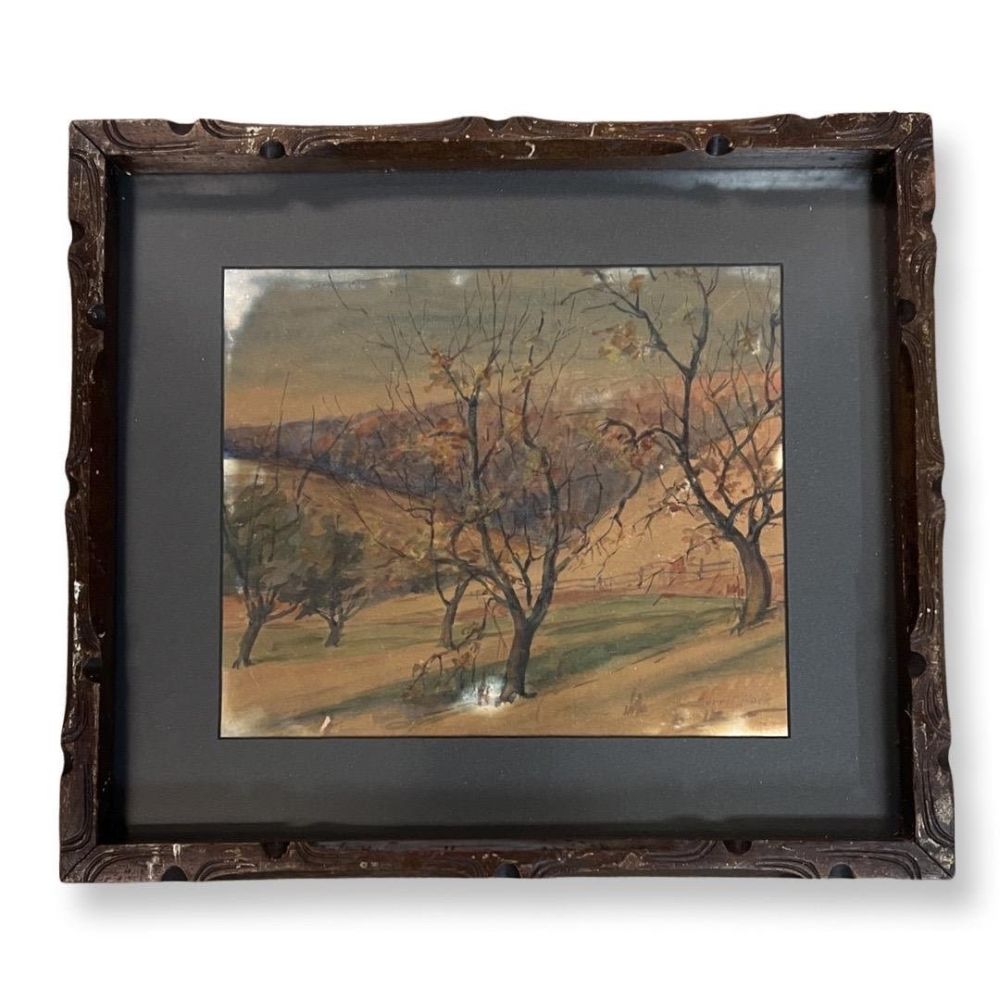
Bidspirit auction | Dorrit Black (1891 - 1951)
Dorrit Black (1891 - 1951) Australia - Dorrit Black (1891 - 1951) Watercolor and pencil on paper, Signed , measures 8.5” x 10.5”Dorrit Black was one of a handful of intrepid Australian women who ventured overseas in the 1930s to complete and broaden their artistic training in the United Kingdom and continental Europe. Black, along with her peers Anne Dangar, Ethel Spowers and Eveline Syme studied at the pioneering schools of Albert Gleizes and André Lhote in Paris and at the Grosvenor School, where they studied experimental lino-cutting under Claude Flight. Although Black, Spowers and Syme all reached international acclaim with their achievements in this democratic and radical medium, they nevertheless returned to Australia and mostly continued their artistic practice in the traditional forms of oil on canvas and works on paper. Dorrit Black, an Adelaidean, returned to the southern state and achieved broader success than her peers as an exhibiting society painter, a teacher of landscape painting (with Jeffrey Smart being a notable, and impressionable pupil) and a strong advocate for artistic pursuits and social affairs, until her untimely passing after a road accident in 1951. In 1939, Dorrit Black, aged 48, had purchased her own home in the suburban fringes of Adelaide after decades of living with, and providing primary care for, her ailing mother. Her new house was carefully arranged to suit her artistic pursuits, and a large south-facing window gave the artist direct views on to the hills of the Mount Lofty Ranges, where she had spent significant time as a child.Her paintings from this time reflected Black’s newfound self-sufficiency and confidence, becoming more realist and personal.1Farmhouse, Mount Torrens is one such work, humble in size and documentary in subject matter, it reflects a war-time austerity and Black’s socialist fervour in the home-effort. Based in the foothill township of Mount Torrens, whose prosperity and construction had dwindled some twenty years earlier, Black has painted an anonymous portrait of a countrywoman and her humble relationship with the vibrantly green land.Discreetly benign, this rural scene of a woman absorbed in her handcraft sitting on the porch a house has the quiet discipline and dignity of Black’s earlier works of wartime labouring scenes and activities of local patriotic organisations (for example The Cloth Cutters, c.1940 – 42, private collection).Still using the dynamic diagonal compositional techniques, flattened picture plane, simple geometric foundations and colour theory of Lhote and Flight, Farmhouse, Mount Torrens conceals its complexity with a childlike styliszation. This work, most probably included in Dorrit Black’s one-woman survey show at the Royal South Australian Art Society’s exhibition hall in 1945, demonstrates Black’s final determination to express the realities of nature and ordinary people without sentimentality and undue lyricism. Condition: Good Condition