Bidspirit auction | Kuntres Tefillos — Minhag Ashkenaz
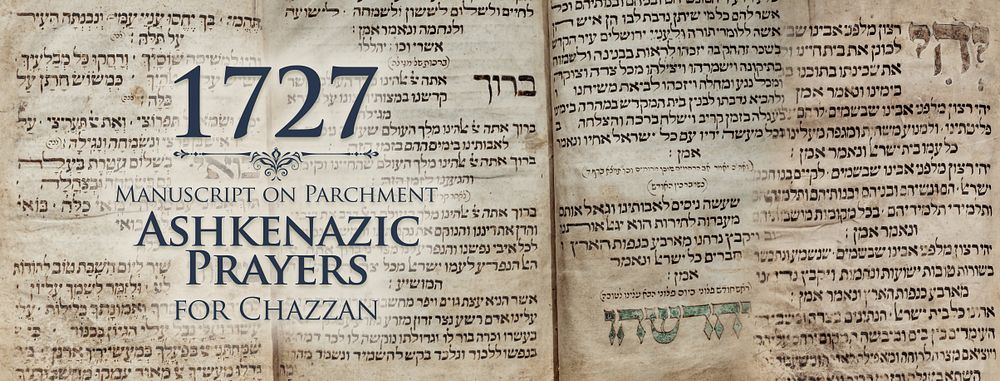
Kuntres Tefillos — Minhag Ashkenaz for the Chazzan and Shatz, Written on Klaf — 1727 A remarkable siddur-kuntres prepared for the chazzan ha’korei ba’bimah, written in beautiful Ashkenazi ksav on klaf by the sofer R’ Zelig Asher b”r Yehoshua, dated 1727. The kuntres opens with the berachah of the chazzan following Krias HaTorah, and includes the full seder Mi Sheberach, Yizkor, the piyutim of Lecha Dodi, Shoshanas Yaakov recited after the Megillah, and additional tefillos relevant to the shatz during the davening. This volume was clearly prepared for the chazzan of the kehillah, who also served as the one who proclaimed the Mi Sheberach for the aliyos. At the conclusion of the siddur appears the notation: “Eilu ha’shemos asher mechuyav ha’shatz lehazkir b’chol matnas yad…” followed by a list of names to be mentioned. It appears that their minhag was to mention fixed names of benefactors of the beis medrash at each aliyah — reminiscent of the later minhag in many kehillos to bless the Rav or Rebbe at every aliyah. (See further on the hishtalshelus ha’minhagim in Kiryas Sefer, vol. 33, p. 249.) Noteworthy Nuschaos and Minhagim Preserved in This Siddur Several fascinating details appear in this unique siddur: In Kel Maleh Rachamim appears an unusual nusach: “…es nishmas ha’kedoshim v’ha’tehorim, shenehergu v’nitbechu v’nishchatu v’nisrefu v’nitbe’u al kedushas Shemo ha’meyuchad, b’omram Shema Yisroel Hashem Elokeinu Hashem Echad…” In Birchas HaChodesh, the word “yechadshehu” is written in green ink. In Hanosen Teshuah LaMelachim, an addition appears in ksav yad to the nusach ha’tefillah — as is well known that in many lands the authorities would carefully examine these tefillos “for their welfare.” A particularly striking note records that a zemer na’eh was sung in honor of the chassan, together with the nusach of the Mi Sheberach, apparently after his aliyah: “Echad yachid u’meyuchad, Kel nidrash l’var levav asher sho’el…” This minhag and its remazim are mentioned in later sifrei minhagim such as Ta’amei HaMinhagim. Before us is a very early source for this practice, which in many places has been forgotten. Notably, this ksav yad records that the piyut was recited on the Shabbos following the chasunah, in the presence of the chassan. Our prevalent minhag today is for the chassan to receive an aliyah on the Shabbos before the chasunah and the piyut is sung then. In Nisuin Kehilchasan the custom is brought to say the piyut at that time; however, it would appear that before us is an early source indicating that originally this was said specifically on the Shabbos Sheva Berachos.