Bidspirit auction | Tin Tzedakah box, 19th century
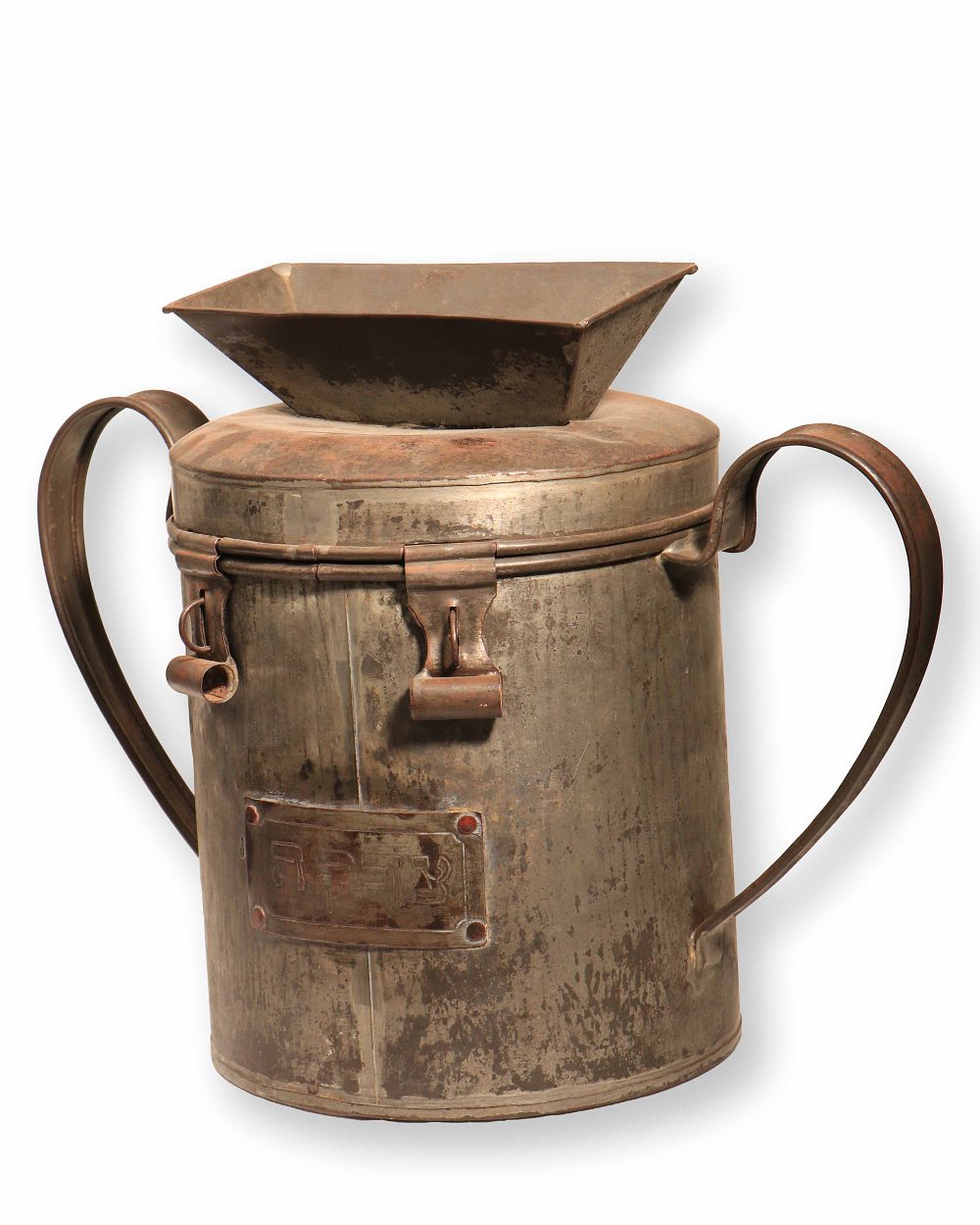
Tin Tzedakah box, 19th century (1920–1950?), Central Europe. - Large Tzedakah box, handmade sheet metal, 19th century (1920–1950?), Eastern Europe. Large Tzedakah box, handmade of sheet metal. The body of the box is cylindrical (height 29 cm) with a wide diameter (19 cm). On the sides are two large metal handles, made of the same material, shaped by bending and hammering — lending an authentic appearance of simple yet functional workshop craftsmanship. The base of the box is soldered externally, without nails. At the top is a designated slot for inserting coins; around the opening are two straight metal strips serving as a guiding frame for coin insertion. The box has two clasps. Affixed to the body of the box is a metal plaque bearing the inscription “צדקה” in Ashkenazic script. The plaque is executed in repoussé work, with raised letters, and is secured to the body by metal rivets — a technique characteristic of Jewish sheet-metal work in Central Europe in the 19th century. Since this is the only inscription, it may be inferred that the box was placed in a synagogue or another public institution and was not intended for a specific organization such as a Chevra Kadisha, Bikur Cholim, Hachnasat Kallah, etc., but for general communal needs. During weekday prayers, or after Shabbat, the public would place their charity money either with the assistance of the Gabbai or synagogue Shamash, who would circulate with the box, or independently. The item is authentic and reflects the daily life of a Jewish community and the charity objects that were an integral part of the public space and of communal life.